- SiteNews
- Posts
- 📈 On track
📈 On track
Ottawa and Alberta sign a pipeline deal, Canada's first infrastructure assessment, and learning from the REM.

Russell Hixson
December 02, 2025

Good morning! 🧔Moustaches down, everyone! It’s time to tally the Canadian construction industry’s Movember efforts to support men’s health initiatives. This year builders raised $996,365. Gillam Group led the pack with more than $73,000 in donations.
⏰ Today’s read: 5 ½ minutes
MARKETS
Economy: Canada’s stronger-than-expected 2.6% third-quarter GDP growth masks deeper weakness, economists warn, arguing the headline was inflated by a sharp drop in imports rather than genuine economic momentum. Underlying indicators — including flat domestic demand, soft household spending, and rising consumer caution — point to a fragile economy that may contract in the fourth quarter, especially as October’s flash estimate shows a 0.3% decline.
NEED TO KNOW
The week's headlines
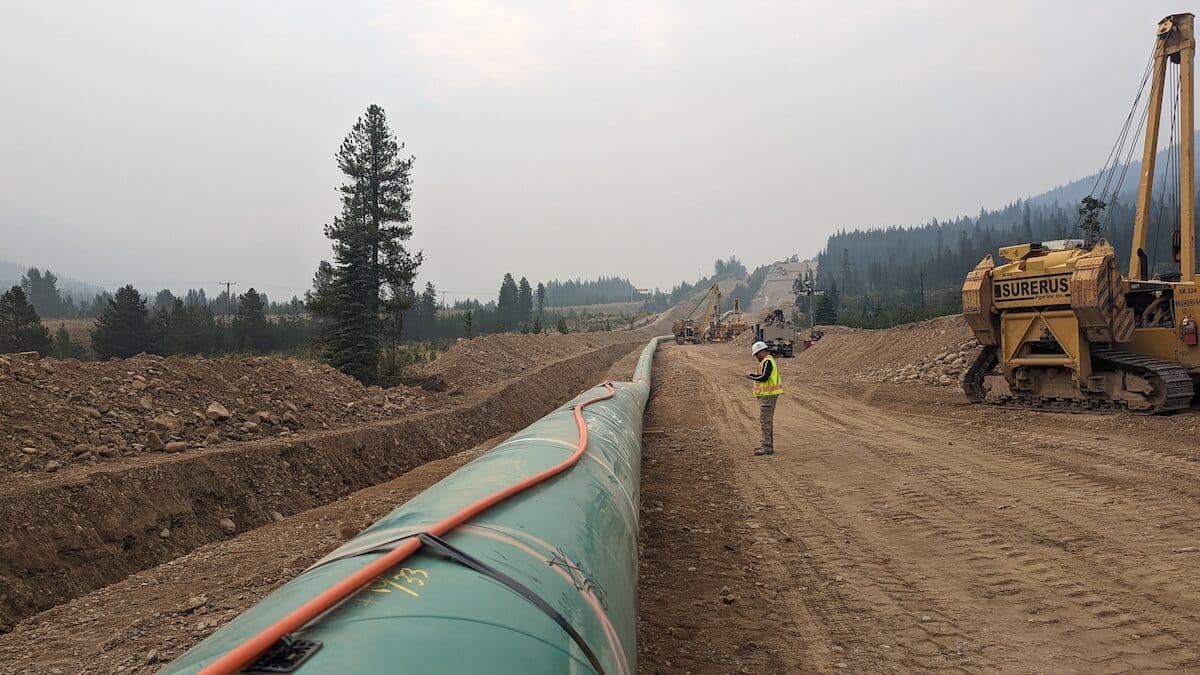
🛢️ Pipe dreams: The federal and Alberta governments have signed an energy agreement that suspends Ottawa’s oil and gas emissions cap and clean electricity regulations in Alberta, backs an Indigenous co-owned bitumen pipeline to Asian markets, and commits to partnering with industry on the world’s largest carbon capture, utilization and storage project.
🚗 Bypass: Ontario has awarded detailed design contracts for the central and east sections of the 16.3-kilometre Bradford Bypass, a new four-lane highway linking Highways 400 and 404 through York Region and Simcoe County, with WSP Canada and Stantec leading design and Jacobs and Egis overseeing program management.
🔎 Assessment: The Canadian Infrastructure Council has released Canada’s first National Infrastructure Assessment which uses data on population growth, asset conditions and climate risk to evaluate how well the country’s infrastructure can support new housing. The report concludes that Canada cannot meet its housing goals without major investments in “housing-enabling” systems and stresses the need for more resilient, better-coordinated infrastructure planning.
⛏️ Ring of Fire road: Ontario and Marten Falls First Nation have signed a Community Partnership Agreement to build the all-season Marten Falls Community Access Road, a key link to the Northern Road Link and the Ring of Fire critical minerals region, with construction slated for August 2026 pending environmental approval. The province will invest up to $39.5 million in two phases to support community infrastructure, local procurement, and preparation work
THE BIG STORY
Can the REM teach the rest of Canada how to build transit without breaking the bank?
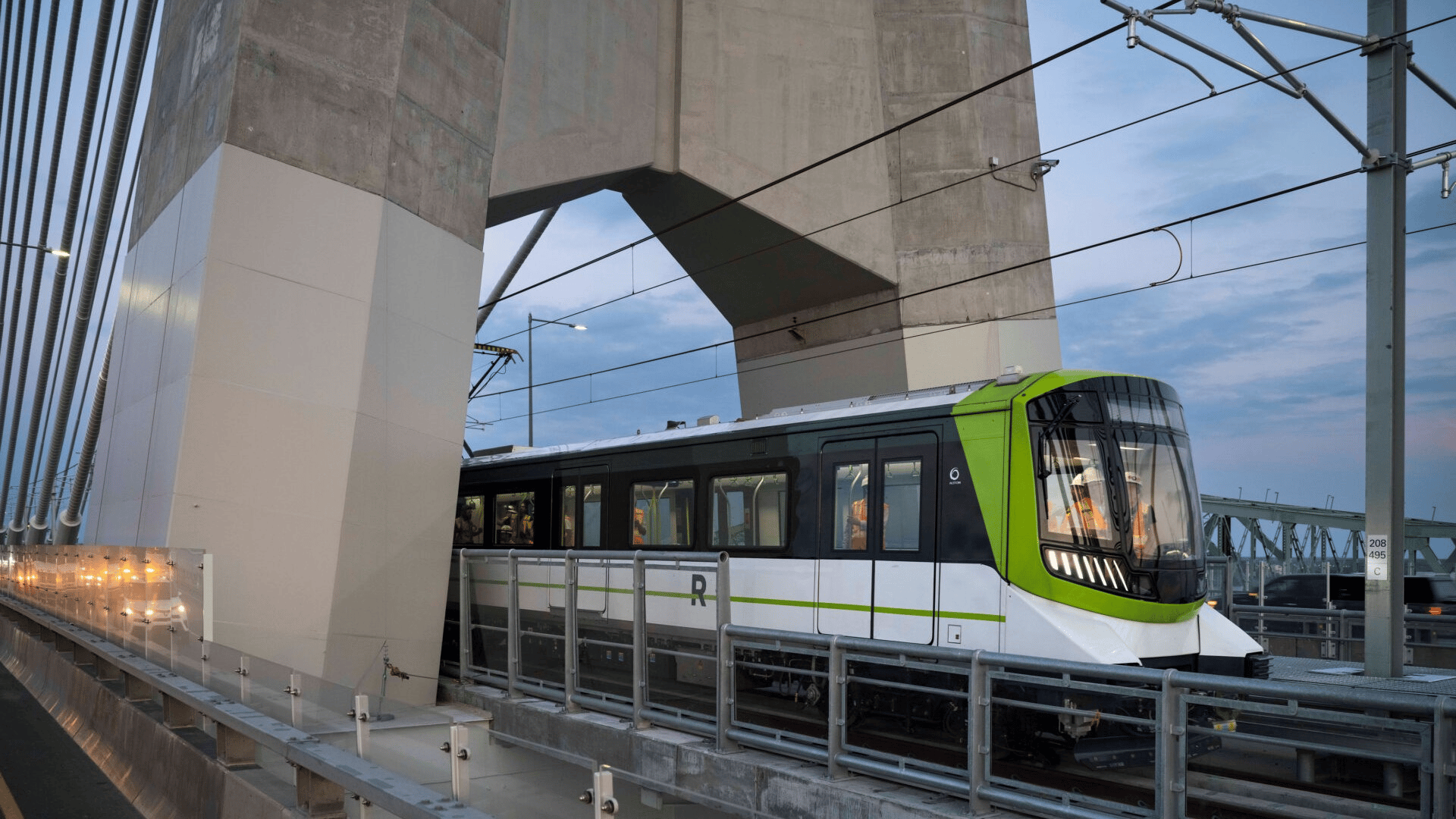
Montreal just pulled off something others keep fumbling: it opened a big, modern rail line that didn’t completely implode under its own complexity. The Réseau express métropolitain (REM) is already moving riders on a 14-station segment and will eventually stretch 67 kilometres across four branches, fully automated and fully electric.
Who’s the boss: Instead of handing the project to a traditional transit agency, Quebec turned to CDPQ Infra, the infrastructure arm of the province’s public pension fund. CDPQ Infra holds the majority equity stake, designs, builds, operates and maintains the system, and gets paid per passenger-kilometre for 99 years.
No snowflakes: A major strategy was to stop reinventing everything. Stations share a common design language—glass, light-coloured wood, common structural and systems templates—rather than bespoke architecture at every stop. Trains, systems and platforms are standardized as well. This compresses design timelines and unlocks economies of scale.
The result: even with pandemic-related overruns that pushed the total cost close to $7.9 billion, REM’s average cost per kilometre sits around $140 million, far below other recent North American megaprojects that are coming in at several times that price. Contrast this with Eglinton Crosstown. The complex P3 structure, deep tunnelling under a busy arterial, mid-stream design changes and governance disputes have combined into a 12-plus-year saga, years late and billions over budget.
Why it matters: REM isn’t perfect—its own opening was delayed from 2022 to 2023 and the system had reliability issues in its first months—but the overall package still lands as a bargain compared to peers.The key difference is that risk and accountability are concentrated. If this can be replicated, density and reduced traffic/emissions across the nation could follow.
PROJECT SPOTLIGHT
Large scale co-operation

Kennedy Green is a major cooperative housing development at 2444 Eglinton Avenue East, led by Civic Developments, Windmill Development Group, and the Co-op Housing Federation of Toronto through the City’s CreateTO program, with design by Henriquez Partners Architects. Built in two phases, the three-tower project will deliver 918 units—612 designated as co-op housing and 306 as affordable, rent-geared-to-income—making it the largest co-op housing development in Canada in 25 years.
PROJECT UPDATES
Halifax fire training project needs more funding
Calgary airport runway project wraps after two years
Lansdowne 2.0 work starts next week
PNE amphitheatre project budget spikes
$36M earmarked to improve/conserve Rideau Canal
WHAT WE’RE TALKING ABOUT
READ: 👮 Surrey, B.C. cracks down on illegal construction
WATCH 🪵 Did this building crack the mass timber code?
READ: ⚡ Edmonton expands accelerated construction strategy
WATCH: 🛹 This skater rode down the side of skyscraper
READ: 🏠 Winnipeg builders push back against fourplex plan
ADVERTISE WITH SITENEWS
Get your message and brand in front of Canada’s construction leaders and decision-makers by advertising in our newsletter. Learn how to partner with us here.
Here’s to a great rest of the week!
Disclaimer: SiteNews is an independently-operated news website. Views expressed are that of the editorial team and are based on publicly available information unless otherwise noted through sponsored content.